In summer 2026, press reports said many parts of Baghdad received only 8–10 hours of grid power a day, and other governorates even less. Every summer, the neighbourhood generator subscription turns into a second electricity bill that never ends. Is solar a sound economic alternative? Let's work it out calmly, with real numbers.
How the generator subscription works
Neighbourhood generators sell a monthly subscription measured in amps. The operator fits a breaker sized to your subscribed amps and you pay a fixed fee per amp, however much energy you actually use. There are usually two lines: the 'golden line', which covers all grid outage hours, and a regular line that runs for fewer hours.
- Official price: in July 2026 the Baghdad Provincial Council set 12,000 IQD per amp for the golden line and 8,000 IQD for the night line.
- Actual price: reports said the price reached 20,000–25,000 IQD per amp per month in some areas.
- Typical subscription: 5–10 amps per household.
What the subscription doesn't give you
A subscription caps power, not energy: each amp is only about 220 W of simultaneous load. So 10 A is roughly 2.2 kW, which barely covers a standard 1.5-ton AC plus some lights. Add limited hours on the regular line, noise and fumes, and price spikes at the peak of summer, exactly when you need power most.
What does a solar system cost in 2026?
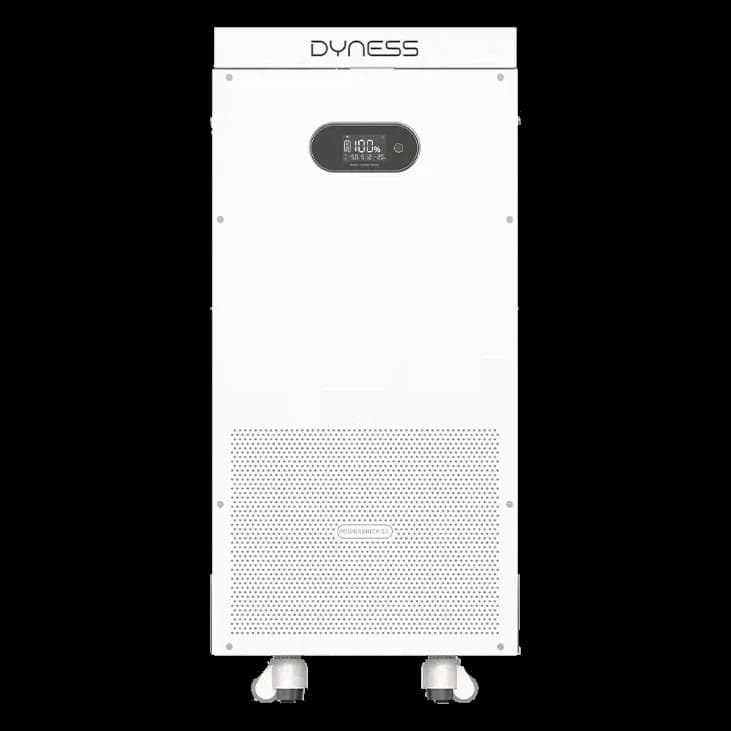
Prices vary with size and components, but recent Iraqi press reports give a general picture: 5–6 kW systems at around 5 million IQD, most home systems between 5 and 10 million IQD, and a system described as '15 amps' at about 7 million IQD. Good news too: customs duty on solar equipment was cut from 33% to 5% in February 2026. To see the components and prices of ready-made systems, browse our complete systems.
An illustrative payback example
Take a home subscribed to 10 A at 15,000 IQD per amp: that's 150,000 IQD a month, or about 1.8 million IQD a year. If it replaces the subscription with a system costing 6.5 million IQD, the payback from subscription savings alone is roughly three and a half years, without counting any savings on the national grid bill.
This is an illustration, not a promise: the real result depends on prices in your area, the size of the system, how many months you would have subscribed, and the cost of maintenance and cleaning. But the principle is clear: panels carry 30-year power warranties and modern batteries are rated for thousands of cycles, so a system keeps saving for many years after it has paid for itself.
Costs to include in your sums
- Installation and accessories: mounts, cables, breakers, earthing and labour can add a noticeable share to the component price, so always ask what a quote includes.
- Cleaning and maintenance: regular panel cleaning, especially after dust storms, and an occasional check of the connections.
- Battery life: a modern battery lasts many years, but it is usually the first part you may need to replace in the long run, so factor that in.
Questions to ask before you buy
- Is the inverter powerful enough for the start-up surge of my ACs and appliances?
- How much of the battery's energy is actually usable, not just its nominal capacity?
- How long is each component's warranty, what are the terms, and who follows up a claim if something fails?
- Does the price include mounts, cables, breakers and installation?
The middle way: solar plus a smaller subscription
Many families don't cancel the subscription entirely. Instead they cut it, from 10 A to 5 A for example, and keep it as backup for cloudy days or for charging the battery when needed, while solar carries most of the load. The generator line can be connected to the inverter, with the charging current set so it stays within the subscribed amps.
Financing: the Central Bank initiative
If the upfront cost is the obstacle, the Central Bank of Iraq's solar financing initiative offers loans typically between 7 and 30 million IQD, repaid over 7 years through participating banks. Reports said that in January 2026 the bank capped the interest on these loans at 2.5%. Terms are set by the banks and may change, so check with your bank before applying.
Your next step
Start by finding out what size of system you actually need with our solar calculator, then compare its cost with what you pay the generator every month. If you like, send us the result on WhatsApp and we'll help you choose the right components.