Modern solar panel names are full of acronyms: N-type, TOPCon, HPBC, bifacial, half-cut. Behind each one is a real difference in efficiency, lifespan and performance in the heat. This article decodes them in plain language so you know what you're actually paying for.
N-type versus P-type monocrystalline
Almost every modern panel is monocrystalline; today the difference is the type of wafer. N-type wafers suffer less light-induced degradation in the first months, hold their output for longer and have a better temperature coefficient. That has made them the standard for quality panels, and every panel in our store uses them.
TOPCon technology
TOPCon adds an ultra-thin passivation layer to the back of the cell, reducing electron losses and lifting efficiency. It's the technology behind the JinkoSolar Tiger Neo series, from 615 to 635 W with efficiency up to 22.72%, and dual glass protecting the cells on both sides.
Back-contact (BC) panels
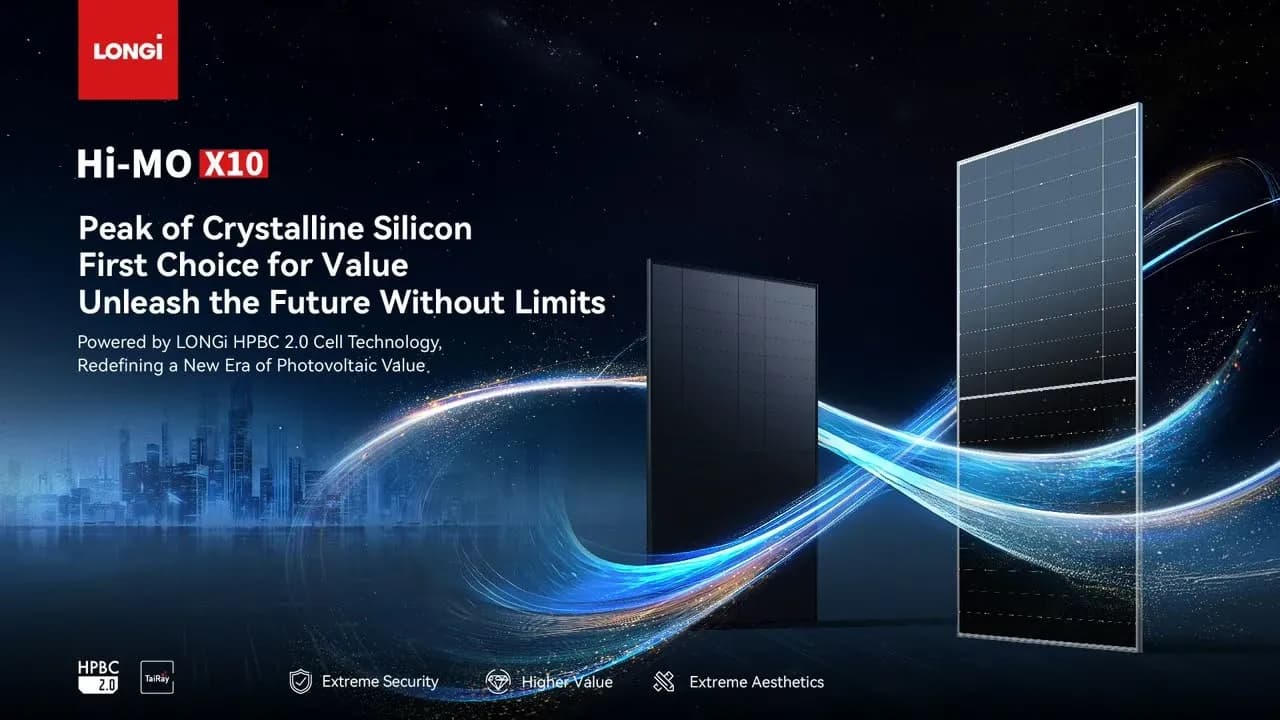
On a conventional panel, metal contact lines run across the front of each cell and block some of the light. Back-contact technology moves all the contacts to the rear, so the entire front surface collects light. That's why the LONGi Hi-MO X10 with HPBC 2.0 cells reaches 24.8% efficiency and 670 W: more power from the same area, with a sleek, uniform look.
Bifacial panels
A bifacial panel collects light on both the front and the back, using light reflected from the roof or the ground. Manufacturers estimate the extra gain at 5–25% depending on the surface colour and mounting height; a white roof or light gravel with a raised frame gives the best results. The Philadelphia Nexus 600 W has a bifaciality of around 80%.
Half-cut cells and multi-busbar designs
Cutting cells in half halves the current in each piece, which reduces resistive and heat losses and improves performance in partial shade, because each half works almost independently. More busbars, as in a 16BB design, shorten the path electrons travel and increase both efficiency and durability.
The numbers that matter in Iraq
- Temperature coefficient: the closer to zero, the better in summer; the Philadelphia Nexus loses only about 0.29% per °C.
- Product and power warranty: 12–15 years on the product and 30 years of linear power output on the panels we carry.
- Annual degradation: 0.35–0.4% a year after the first year, so a panel keeps roughly 87–89% of its output after 30 years.
- Mechanical strength: 5,400 Pa front load rating to handle wind and weight.
- Harsh-environment testing: such as the IEC 60068 dust and sand test, which matters in Iraq's climate.
How to read a panel datasheet
- Maximum power and tolerance: output under standard test conditions; ideally the tolerance is positive only, such as 0 to +3%.
- Power at NOCT: a figure closer to real rooftop conditions; the 635 W Jinko panel delivers about 479 W there.
- Open-circuit voltage (Voc): the number that decides how many panels can be wired in series in each string.
- Dimensions and weight: the Jinko Tiger Neo, for example, is 2,465 mm long and weighs 34 kg, which matters for mounting design and roof load.
Matching panels to your inverter
A panel's voltage rises as it gets colder. The 635 W Jinko panel has an open-circuit voltage of 57.21 V at 25 °C and a voltage temperature coefficient of −0.25% per degree, so on a sub-zero winter morning it can approach 62 V. With a 500 V maximum on the Deye SG05LP1 and OG03, seven panels per string is a comfortable choice, while eight leaves a very thin margin in the cold of the northern governorates. That's why a qualified technician checks these numbers for your site before installation.
Which panel suits your roof?
- Limited space: high-efficiency back-contact panels give you the most power per square metre.
- White roof or raised frame: bifacial panels make the most of reflected light.
- Best value for money: bifacial TOPCon panels balance strong efficiency with a sensible price.
Compare full specifications in our solar panels section, or work out how many panels you need with the solar calculator.


